Requirements
Project Background
With the increasing impact of climate change and habitat degradation, environmental monitoring has become essential for conservation efforts. The Monitoring and Engagement Notifications Module is designed to empower local communities by leveraging Large Language Models (LLMs) and multimodal AI to track and report changes in ecosystems. By integrating real-time environmental monitoring, this platform allows volunteers to document observations using images, videos, and audio recordings, enhancing data accuracy and accessibility.
Despite advancements in AI-driven environmental solutions, barriers remain in making these tools accessible to local communities. Many existing platforms lack user-friendly interfaces and comprehensive data analysis capabilities, limiting their effectiveness. Our module addresses this gap by enabling multimodal searches, allowing administrators to correlate environmental changes, generate detailed reports, and issue alerts for timely intervention.
Additionally, the project provides users with advanced geospatial analysis tools to improve environmental decision-making. Designed with sustainability in mind, the module also aims to minimize its carbon footprint, ensuring an efficient yet environmentally responsible AI-driven monitoring system. Through community engagement and AI-powered insights, this platform fosters a collaborative approach to conservation and long-term ecological sustainability.
Client Introduction
NTT DATA is a global leader in digital transformation and IT services, providing innovative solutions across various industries. With a strong focus on sustainability and technology, NTT DATA collaborates with organizations worldwide to drive data-driven decision-making and AI-powered solutions.

Project Goals
This project aims to develop an environmental monitoring platform powered by multimodal AI and geospatial technology, enabling community volunteers to document ecological changes in real time through images, videos, and audio. The system integrates intelligent recognition, map-based visual search, task management, and notification features to support rapid identification of events such as missing animals, coordination of conservation activities, and timely alerts. With efficient data processing and low-impact AI design, the platform supports data-driven local ecosystem protection and sustainable development goals.
Requirements Gathering
To align ChatLincs with user needs, we conducted semi-structured interviews with local residence and civil servant. This flexible approach enabled detailed insights into user preferences, ensuring a user-centered design foundation.
Local Resident
Q: What would you need from this platform?
A: Simple way to quickly upload photos, videos, or recordings outdoors—ideally with analysis provided through LLMs without requiring tech skills.
Q: What features would be most helpful?
A: A way to see summaries and analyses of my uploads using multimodal data.
Q: Are there any features you’d rather avoid?
A: No complex or slow systems; I want it clean and reliable.
Q: What would keep you using it?
A: Seeing the impact of my contributions on the community.
Civil Servant
Q: How do you currently monitor and document?
A: I typically rely on manual notes and reports, but it's time-consuming and harder to track long-term trends without a digital system.
Q: What kind of information would you like to access from previous reports?
A: Historical summaries of environmental changes, such as the spread of invasive species or damage patterns, would be very helpful for long-term planning.
Q: What feedback options would you find useful?
A: Easy to flag issues or suggest improvements directly on the platform would be ideal, especially if other users can see and respond.
Personas
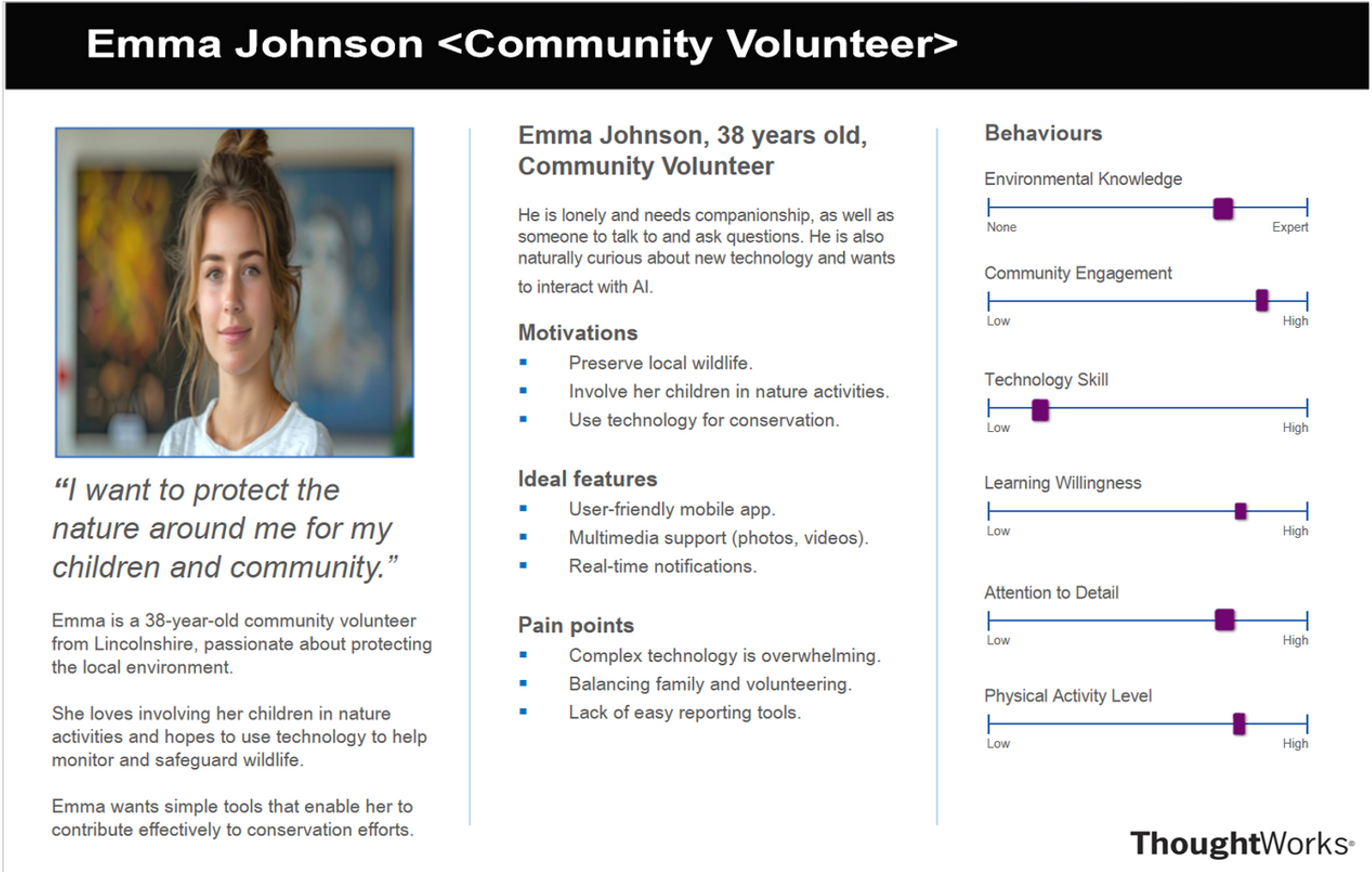
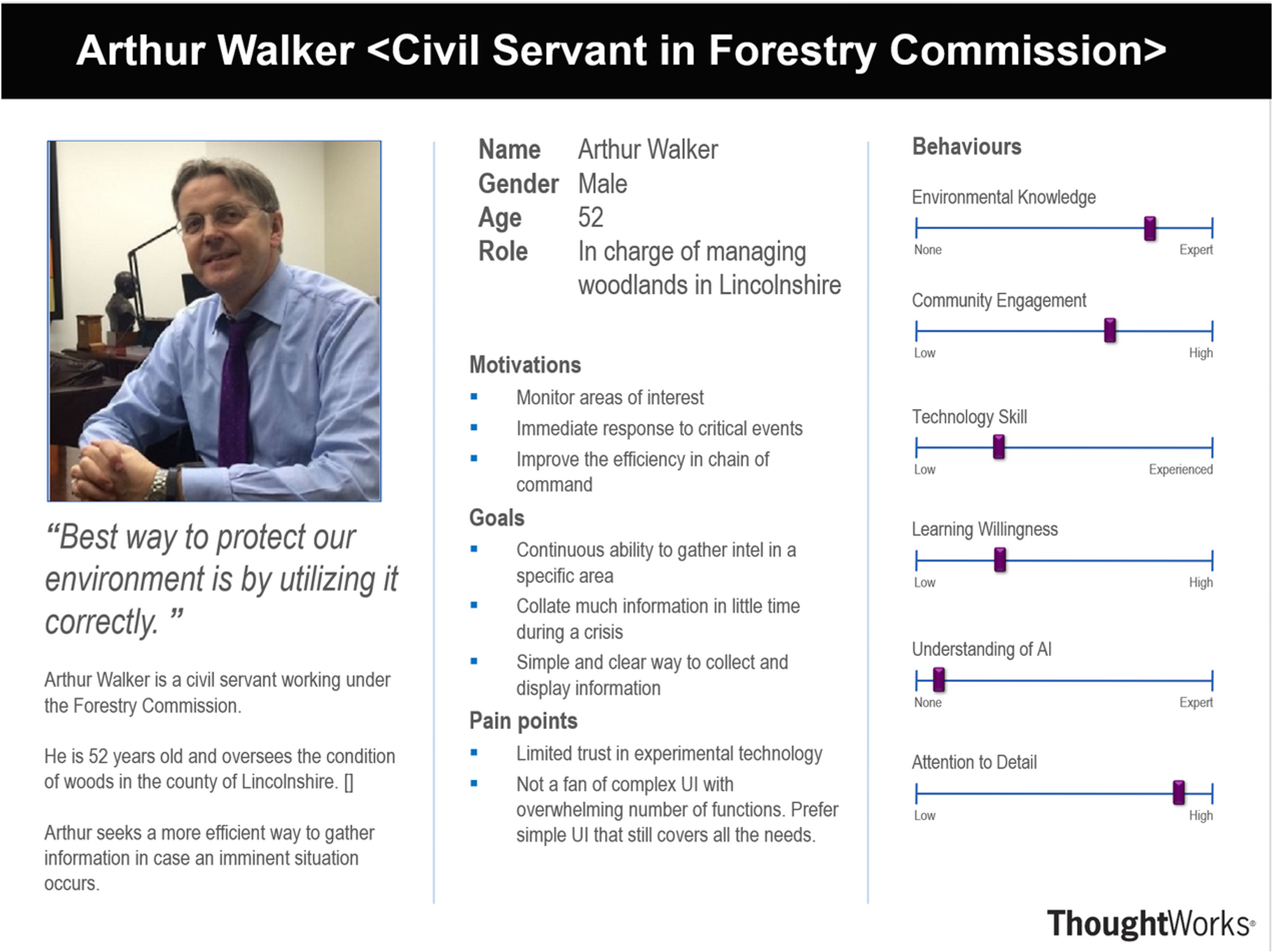
Creating personas allowed us to better understand our target users and align our design with their needs. By defining key user types, we ensured that our system remains intuitive, accessible, and engaging. These personas helped our team maintain a user-centered approach throughout development, allowing us to anticipate challenges, refine features, and enhance the overall experience. Below are the selected personas representing different user roles in our platform.
Use Cases
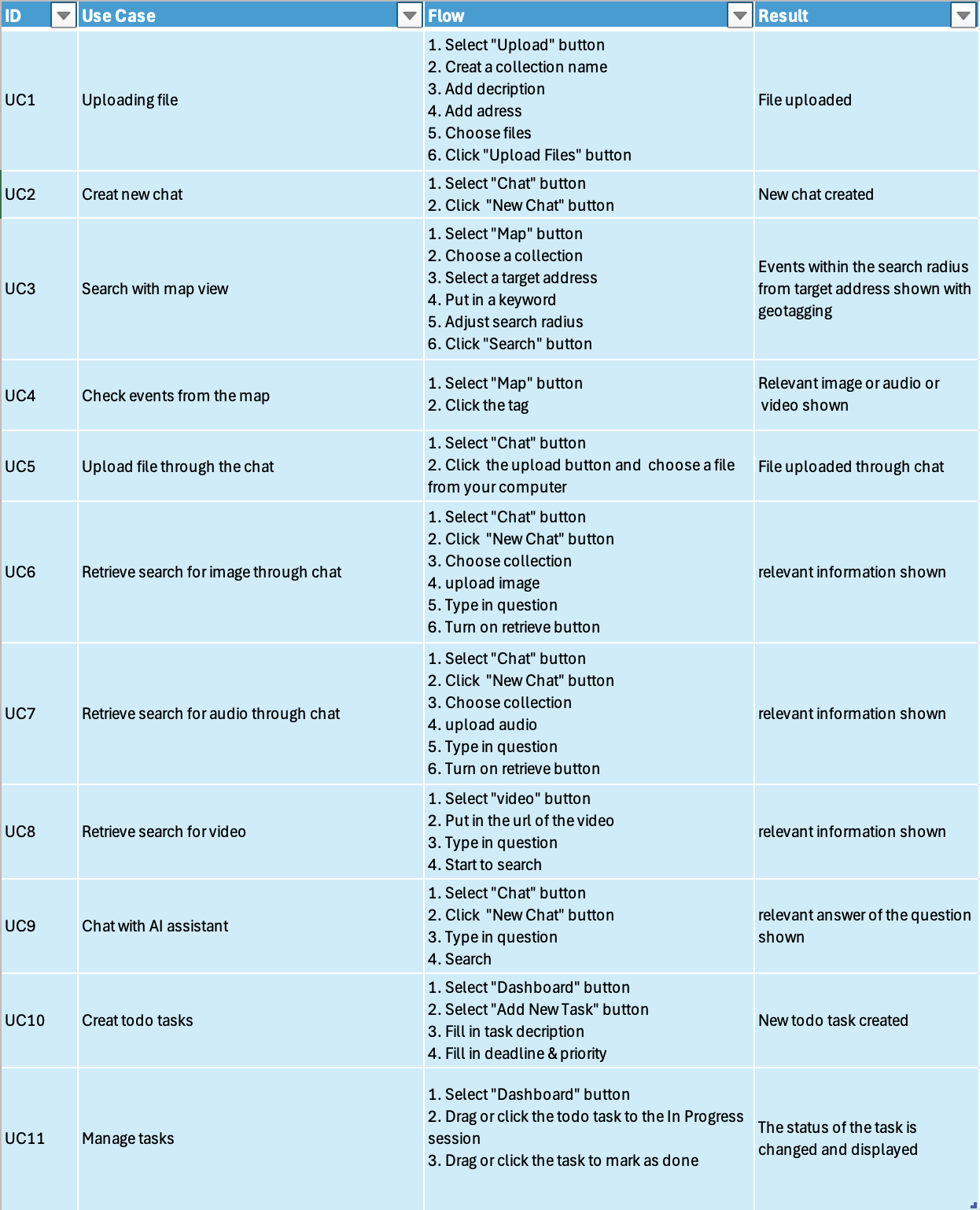
Use cases help define system functionalities by outlining user interactions, ensuring a clear and efficient design.
MOSCOW
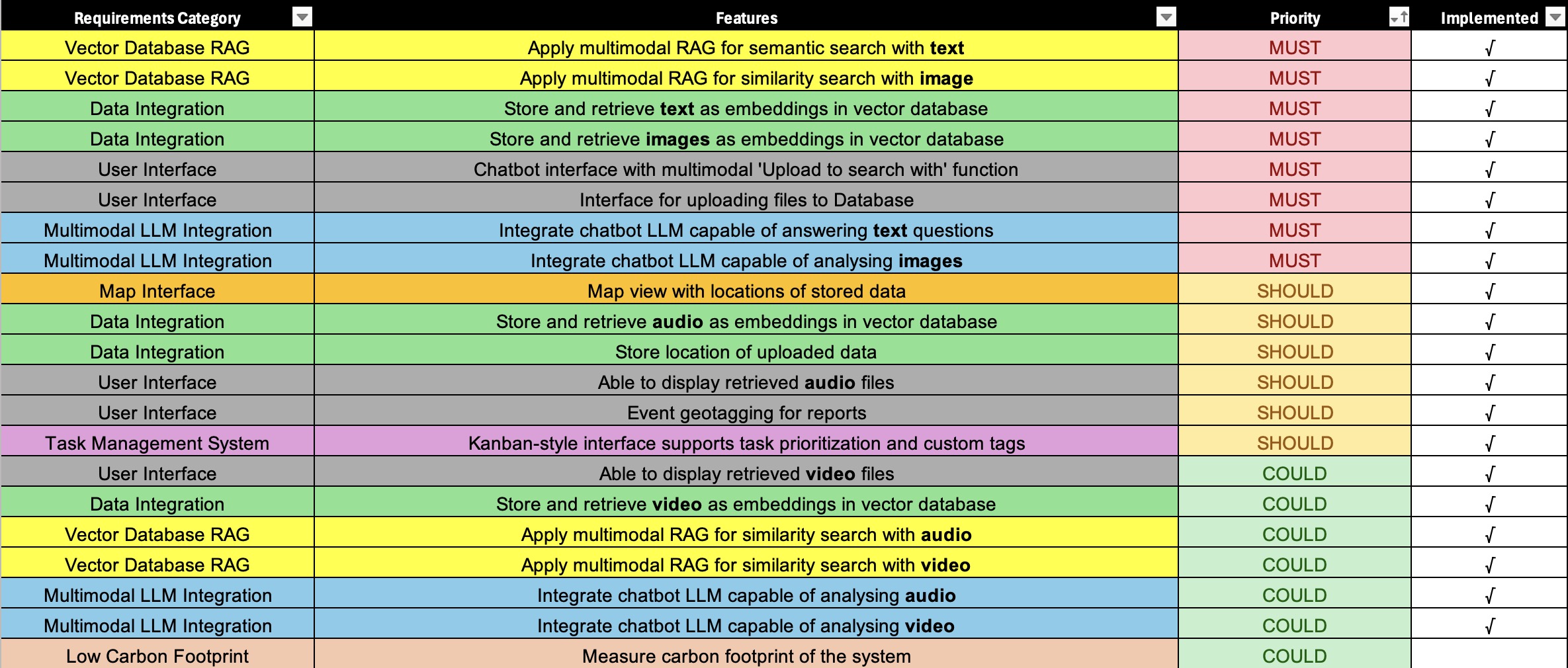
To prioritize system requirements effectively, we developed a MoSCoW list based on user and client needs. This helped us categorize features into Must-have, Should-have, Could-have, and Won't-have, ensuring a structured approach to development. The final version was refined through discussions with the client to align with project goals.