
Mapping technology has been around us for years, however, major players in the field, such as Google Maps, unfortunately do not provide enough accessibility features. The aim of our project was to create a database with accessibility-focused data layers, but more importantly, also display it in a accessibility-friendly component.
We conducted substantial research into already existing accessible navigation providers and found that most of them very specialized for a specific disability, such as Japan Walk Guide [1] and Wheelmap [2] for wheelchair users and our partner Soundscape for visually impaired navigation (not-widget like functionality).
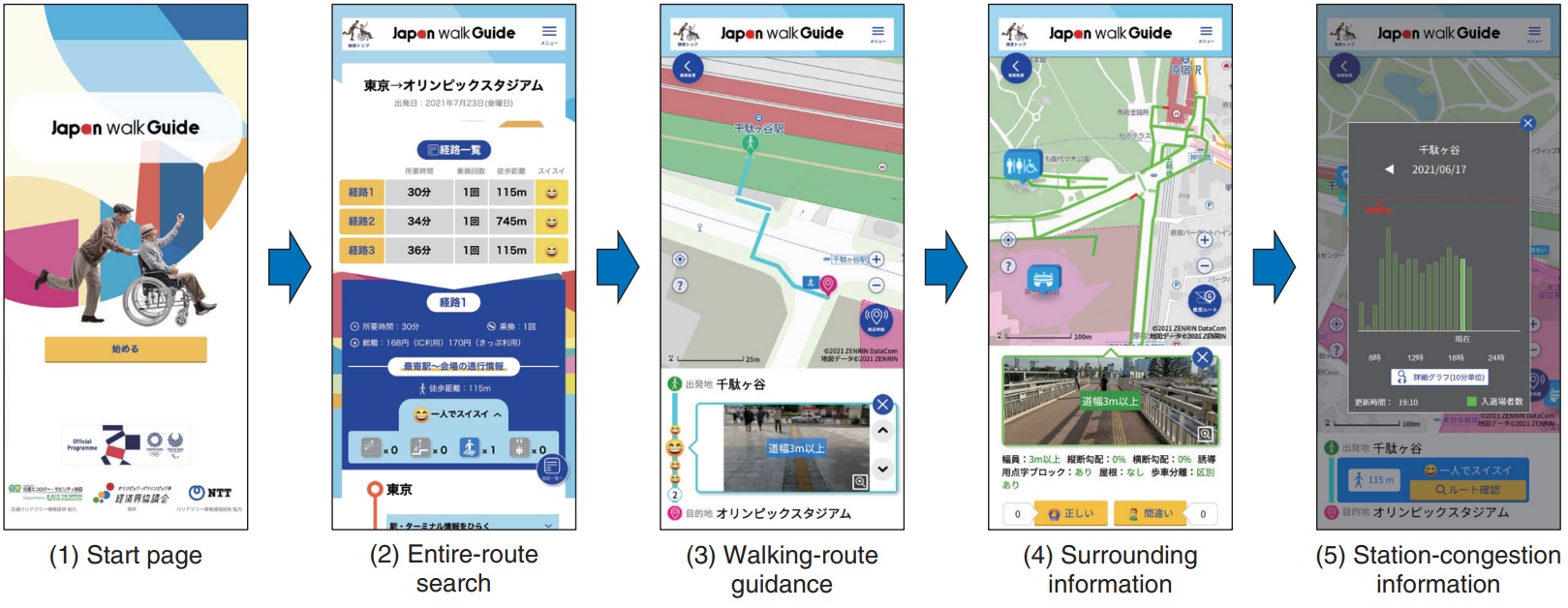
Japan Walk Guide is a navigation tool developed by NTT to assist individuals with mobility challenges in dense urban environments like Tokyo. The app combines AI-powered image recognition (using satellite imagery and street-view data) with crowdsourced updates to map accessibility features such as ramps, elevators, and obstacle-free pathways. It leverages 5G networks for real-time data transmission and integrates indoor navigation using Bluetooth beacons in stations and buildings. The app's offline functionality is enabled by locally cached maps and preloaded accessibility data, while its QR-code launch system uses lightweight Progressive Web App (PWA) technology to avoid app installation. Community updates are moderated via a hybrid AI-human system to ensure accuracy [1].
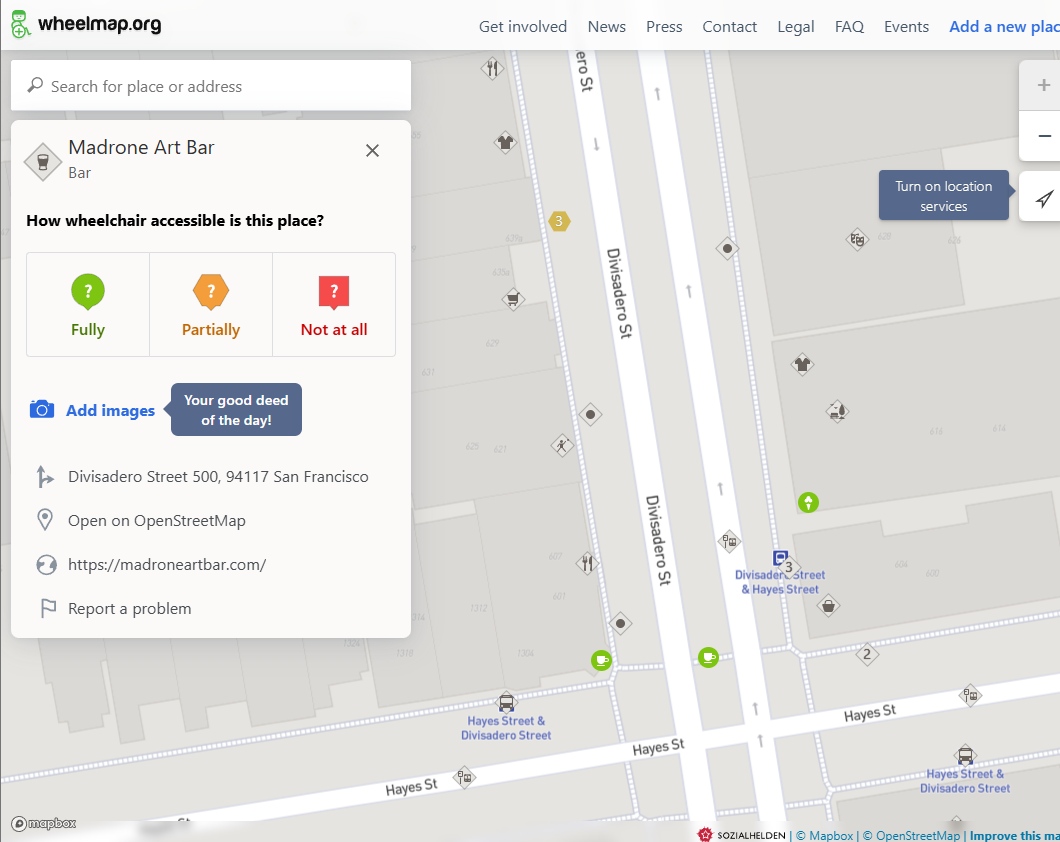
Wheelmap.org is a global crowdsourced platform that uses OpenStreetMap as its base layer, allowing users to tag locations with accessibility statuses (green/yellow/red). The platform focuses on static accessibility data (step-free entrances, restroom accessibility) rather than real-time navigation, relying entirely on manual user contributions [2].
The Sussex Community NHS Foundation Trust offers wheelchair and specialist seating services with an accessible web widget that represents a potential real-world application for our technology [3].
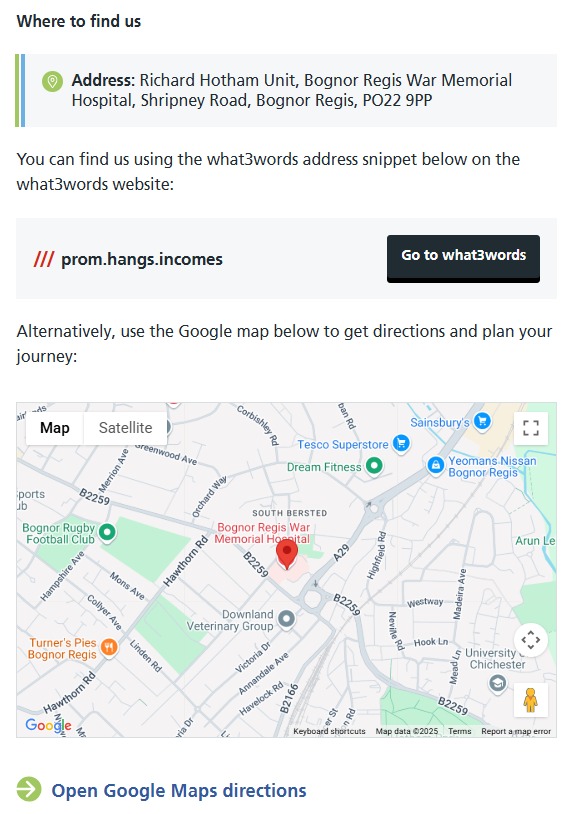
The Sussex Community NHS Foundation Trust provides wheelchair and specialist seating services across Sussex, using a web-based widget to improve accessibility for users. This widget enables patients to access information about wheelchair services, schedule appointments, and track their equipment requests. The implementation showcases a practical application of accessible design principles in healthcare service delivery [3].
In this section, we are evaluating different technologies that can be a good fit for the development of this project.
Three technological aspects were considered during the frontend development of the widget: the Map API, the frontend framework, and the speech service. The widget is designed to display geolocation points retrieved from the database while incorporating accessibility features to enhance usability for all users.
We needed a front-end UI framework that can carry out simple functions such as viewing the database, downloading the database in JSON format, and adding data to the database. Three frontend frameworks were considered for the website.
We need a database capable of efficiently storing geolocation data, particularly for accessibility features such as wheelchair services and zebra crossings. Additionally, the framework for building APIs must support swift posting and retrieval of this data, allowing users to contribute new geolocation points and fetch relevant accessibility details in real time.
The below section provides an overview of the final decisions on technologies used for each product.
Google Maps API was selected for its seamless integration[4] and reliable data quality[5]. Given our reliance on navigation services, its widespread familiarity among users makes it the ideal choice.
Next.js was selected for its scalability and performance benefits compared to Vue.js. Next.js is optimised for fast loading times and it works well for large projects with API-driven content like accessibility databases.
Azure Speech Services was chosen for its superior speech recognition capabilities. Its accuracy in noisy environments compared to Google Cloud Speech-to-Text was another key factor that was considered.[6]
Create React App (CRA) was chosen for its simplicity and ease of use.[7] Due to the simple website structure, SEO and server-side rendering (SSR) were not primary concerns. In addition, CRA keeps the project lightweight, reducing unnecessary overhead for a database-driven website.
PostgreSQL was chosen for the database as it ensures strong data consistency, which is crucial for storing accessibility features. PostgreSQL also has better query optimisation features,[8] ensuring efficient retrieval of geolocation data, especially working with large datasets.
FastAPI was chosen due to asynchronous capabilities, making it significantly faster than Django for handling API requests, which is critical for a geolocation-based system that requires swift data retrieval and posting. FastAPI's support for Python type hints and built-in data validation[9] ensures robust and secure API endpoints, reducing potential errors when handling location-based data submissions.
Citing all sources used in research and technology selection.